Concrete Installation and West Texas Weather
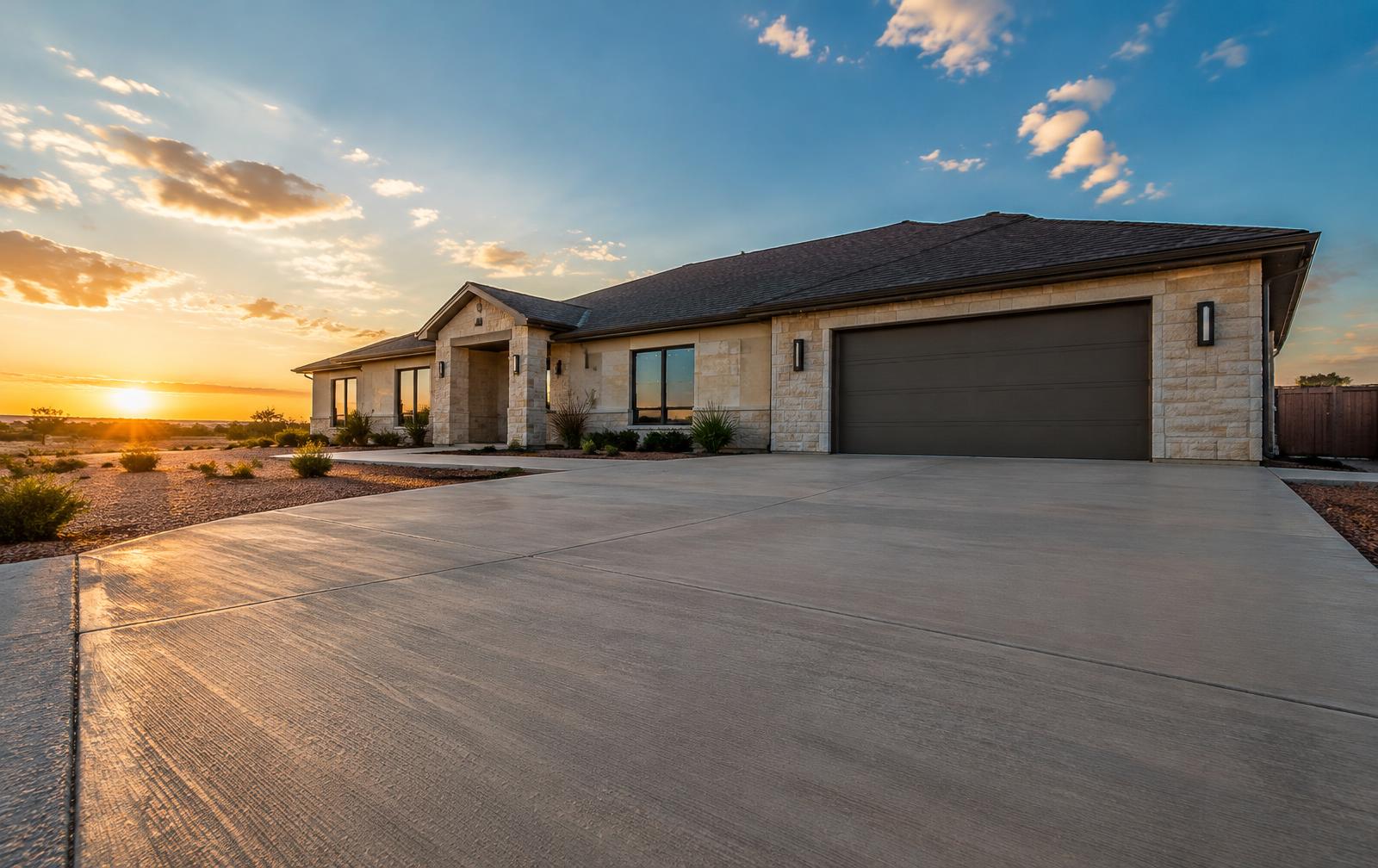
The South Plains can bring triple-digit heat, strong spring winds, sudden storms, and hard freezes. Each affects how concrete is placed, finished, and cured.
Hot weather
High temperatures speed up setting and evaporation, giving crews less time to finish. Contractors may pour early in the morning, use cool mix water or admixtures, and apply curing compounds or keep the surface damp.
Wind
Wind accelerates drying at the surface and can contribute to shrinkage cracking. Windbreaks, evaporation retarders, and prompt curing help.
Cold weather
Fresh concrete must be protected from freezing. In cold snaps, contractors may delay pours, use blankets, or adjust the mix.
Rain and storms
Heavy rain on fresh concrete can damage the surface. Contractors watch forecasts and may cover work or reschedule.
Soils
Some South Plains soils contain clay that swells when wet and shrinks when dry. Good drainage and careful base preparation help reduce movement under slabs.
What to ask your contractor
- How do you schedule pours around heat, wind, and cold?
- What curing method will you use?
- What happens if weather forces a delay?
- How will drainage be handled on my lot?
Request a free estimate
Tell us about your project and we'll match you with an independent local professional.